Thursday, 4 May 2017

It's Easier Than You Think.....

No seriously, it really is!

If you are not as fit as you would like to be then getting fit (fitter) can be a daunting challenge. Especially if you've had a quick look of Facebook or Instagram for some inspiration and come across pictures of unbelievably toned and muscled young men and women who are portraying the latest training routine, fitness trend or product!

However, rest assured that most of these guys and girls are models and do this for a living!

It is also important to understand that Rome wasn't built in a day, so take that first step of many and begin your fitness journey now. If not, then a year from now I guarantee that you’ll wish you had so do your future self a favour!

Regrets are no use to anyone

Doing a ten minute walk every day is way better than doing nothing, you are lapping those people sitting on the couch! Step by step literally, on the road, the treadmill or the stepper gradually build up the time and distance that you walk for.

I really can't emphasise this enough but it is really is easier than you think. If you are not sure what to do in the gym then speak to a gym instructor or a personal trainer to show you how to use the gym equipment and to get a programme developed for you.

It should be a simple programme to start with and should address any issues or needs highlighted during the initial consultation such as postural or movement deficits. For most people this means some specific exercises and gentle stretching.

Simple but thorough consultation and programming

Your programme will gradually evolve over the weeks and months ensuring you remain motivated and heading towards your goals and targets.

A good personal trainer will also look at other aspects of your life and advise on any changes that will improve your overall wellbeing. This may be to improve your nutrition & hydration, aid sleep, reduce stress or improve your skin quality.

Here are some simple guidelines below:

  • Drink more water
  • Reduce caffeine intake
  • Eat less processed foods
  • Eat more fruit, vegetables and salads
  • Sleep consistently i.e. go to bed at a similar time every night
  • Be more active as in move more often (take the stairs rather than the lifts, walk at lunchtimes, get up and walk a short distance between work breaks)

These are only some generic points, your personal trainer should devise a tailored individual plan for you based on your specific needs and goals.

If you don’t have access to a local personal trainer or are unsure what is involved then please feel free to get in touch with me  via email at tsilvester@getcoached.net for a FREE Lifestyle Consultation.

Visit my Facebook page @getcoached.net or Instagram tsilvester67

Monday, 10 April 2017

Olympic Lifts and HIIT Workouts

I’ll start by saying I know that I’m going to upset some purists on both sides of the fence!

Sorry guys but this is already out there in classes and workouts, I am just giving my views and opinions on how the Olympic Lifts can be used within HIIT (High Intensity Interval Training) type workouts.

Grit by Les Mills, Crossfit and various other HIIT or circuit class's use variations of the Olympic lifts in their programmes to great effect. Crossfit in particular uses barbell exercises very well and has made the more traditional lifts popular again.

So let's put this in perspective here, for those of you that feel putting these lifts into a class is a disgrace then consider this; the majority of the people that attend these classes are not looking to lift seriously (in terms of loading up the Olympic lifts or competing) and just want a good whole body workout that leaves them feeling challenged and satisfied at the end of the class. Those that are lifting for sporting gains will seek out a qualified Strength & Conditioning coach and those looking to be competitive Olympic lifters will join a weight lifting club to get expert coaching.

So why are these lifts becoming more popular in mainstream health clubs and included in gym workouts and classes more frequently?

Well the various elements of the Olympic lifts and the full lifts themselves are whole body, multi-joint compound movements that engage a lot of fast twitch muscle thus having a high calorific expenditure, a big metabolic boost effect, high EPOC (Excess Post Exercise Oxygen Consumption) as well as various other health & fitness benefits. They are fast, explosive and energy sapping; ideal for a HIIT workout!

  • Multi Joint - The movement uses more than one joint in the body i.e. the squat involves the ankle, knee and hip joints
  • A Compound exercise is an exercise that elicits multi joint movement such as deadlifts or military press
  • Fast twitch muscle fibres are our high energy muscle fibres that enable powerful, fast movement.
  • Our metabolism is the rate at which our bodies use energy or calories. Our BMR (Base Metabolic Rate) is the energy we use to live, digestion, breathing, heart beats etc
  • Activity increases our metabolic rate as does an increase in muscle mass. Our metabolism can remain elevated for several hours after intense activities
  • This is also linked to EPOC where intense activity has increased our metabolic rate and as such the amount of oxygen required by the body post activity
  • HIIT can reduce the risk of metabolic disease such as diabetes,  cardiopulmonary and cardiovascular diseases
  • HIIT can decrease age related arterial stiffness
  • HIIT can increase insulin sensitivity
  • Correct technique is still crucial, this will ensure that the exercise is safe and effective. Even with a lighter load there is a risk of injury (as with any exercise) if executed poorly.

The benefits are fantastic though, having coached Grit, delivered S&C to various athletes up to Olympic and Paralympic level and used them in my HIIT Works programmes I can assure you of their effectiveness.
I hope you found this motivational?
There are several options for you to find out more/get more from your HIIT workouts;
You can you our HIIT Works closed Facebook group @TheHIITWorksbyGetCoached or email me at tsilvester@getcoached.net or go to www.getcoached.net/the-hiit-works
Well there you have it, enjoy and unleash your inner athlete!

Monday, 27 March 2017

Train less for more!

Eh? I hear you ask, what is this nonsense?


How can you get more change in your body from doing less training?

Imagine fitting your usual hour of training into half an hour, you might need to adjust the weights a little or your pace on the treadmill or bike but yes you can achieve amazing results training for less time but at a higher intensity. This is hard at first and challenging if you haven’t trained this way before.

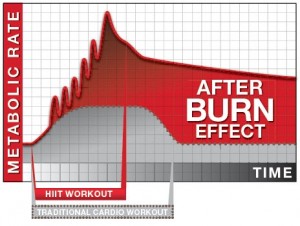
The After Burn Effect basically means that your metabolism remains elevated for longer, that you continue to use calories at a higher rate for longer after a HIIT (High Intensity Interval Training) type training session than you from a standard endurance or strength session.


High Intensity Interval Training


Basically you work hard for short periods of time with shorter rest intervals or active rest in some cases. It can be a shock to the system, a thorough warm up is essential and a good active cool down to flush the lactate out of your muscles too!  


Perseverance and determination will get you through and once you see the results that can be achieved you will be convinced that this is the way to train!


HIIT has been around for awhile in various different guises and is now a major player in the fitness industry as a way to train.


There are many fitness, lifestyle and health related reasons for including HIIT in your training regime. Listed below are just some of the benefits of HIIT

  • Time efficient - approximately half an hour or so training
  • Strength and cardiovascular gains
  • Boosts metabolism
  • Increases insulin sensitivity
  • Reduces age related arterial stiffness
  • Reduces risk of metabolic disease such as diabetes and arteriosclerosis
  • Burns more calories during and after training
  • After Burn


An increased metabolism for longer after training

HIIT has so many peripheral benefits too; it’s not about how heavy a weight you can lift but how much work you can achieve with a moderate weight. The emphasis is on whole body training so there is no pressure to stick to training certain body parts on set days etc. The variety of different workouts also means that you can adapt your training easily if you are travelling for work or pleasure and the local gym doesn’t have all your usual training equipment in it. You could even do bodyweight only workouts on the beach!


Challenge, Adaptation, Change, Progress


The variety of exercises available and the constant change in the workout structure keeps the body guessing as to what is coming next, this challenge will ensure that the adaptation to training process is always working thus limiting staleness, overtraining and driving progress.


Now this is all great if you know how to structure your workouts, choose what exercises to use and in what order to use them?


There are loads of great apps and groups available to help with this and one such is the Get Coached HIIT Works programme. This is a closed FaceBook group that gives you access to free programmes, coaching videos and the chance to get directly in touch with a coach (me) to ask any questions as well as reach out to the Pages training community for feedback, input and programme shares.


To find out more about the Get Coached HIIT Works programme please get in touch with me on tsilvester@getcoached.net or leave your email at www.getcoached.net/the-hiit-works to unleash your inner athlete and be a better you!

Thanks for reading and I hope this has inspired you to try a HIIT workout or two!

Sunday, 12 March 2017

It's a two way thing!


The ability to communicate (eloquently in some cases) is what separates us from the animals. It is something we learn but it is also something that is innate.


Communication is essential if there is to be understanding, and it’s definitely a two way thing.
What I mean by this is that sometimes one just needs to shut up and listen! This applies more to us coaches than the athletes or clients we work with, in fact it can be tough getting them to talk at all sometimes!

It's a two way thing!


Learning to listen, I mean really listen to what is being said can be a real challenge for some and is very easy for others. I have been told I am a good listener, I certainly like to think I am. I am not sure if this is because I am hard of hearing and from a young age have had to concentrate on what people are saying or if I do actually just pay more attention to what is being said? Whichever one it is it certainly has helped me to understand what my athlete’s and client’s needs are and to use their input and feedback to help them achieve their targets and goals.

Learn to listen!


Getting people to talk, asking the right questions and knowing when to stay silent can really help in getting a better understanding of our clients and athletes. These are basic skills that any coach should have no matter their field of expertise. If we are to do our best for our athletes then we have to be able to listen to what they need, or sometimes ask the right questions so that they are clear on what they need which may not be the same as what they want. It is down to the coach to identify, to draw out from their client what it is they need to improve, goals, targets etc.


Likewise, our clients and athletes must be able to ask us questions, challenge us and demand a high standard of expertise and knowledge from us in helping them achieve their goals and targets.

Ask questions, search for answers!


I know this is a fairly basic article and I am sure there are many, many articles and blogs out there with far more content and detail on communication. However, the point I am making here is a simple one. Talk, listen, ask questions, search for answers, it is all about communicating with each other. As I said, it’s a two way thing!


Thanks for reading this far, I hope this helps and that you’ll communicate more.
Visit www.getcoached.net and leave your email to receive updates right into your inbox.

Monday, 13 February 2017

Spice up your cv workouts!

I recently asked a client of mine if they had any questions on their training and the discussion came round to cv workouts and how to make them less boring! And that is what my next blog should be on I thought, how to make cv workouts less boring. I'll need a better title though, just to spice it up a little!


Get more done in less time!

Cardiovascular work, endurance work, whatever you want to call it is traditionally thought of as steady state work, one pace. On the treadmill or cross trainer for half an hour or so at the same speed. Lots of cv equipment has interval or hill programmes included which are great and certainly help to make the training more varied and it's this type of variation that I want to talk more about.

Do your cv workouts feel like this?


There is more and more evidence showing that HIIT (High Intensity Interval Training) or Tabata type training is not only good for international athletes but for the regular gym user as well. The health and fitness benefits are many and varied and we will be covering them later in this article.
L. Véronique Billat used interval training of varying interval lengths to train high level middle distance track athletes and has shown significant improvements in endurance and speed as well as specific physiological adaptations beyond just cardiovascular improvements. The links below are citations for two of her published works on this.


Her studies also showed that this training also worked with untrained individuals as well.
Dr Izumi Tabata of Tabata training also looked at the training effects of short recovery interval training bouts, see the link below.


This study looked at the benefits of short maximum effort intervals with very short rest intervals. This became known as Tabata rounds, 20 seconds of work with 10 seconds rest for 8 efforts equalling a 4 minute round.


Tabata and Billat’s work were originally geared towards running but have both been used with body weight and weighted exercises to great effect.

This type of training has been shown to reduce body fat, increase muscle mass, increase strength and endurance, help to reduce the risks of heart disease and diabetes, high blood pressure and can increase elasticity in major arteries which can stiffen with age.

So how do I use this to make my cv workouts less boring I hear you ask?

Below is listed several workouts that should ease your boredom a little.

The first three are based on Billat’s timings and should be completed at 85% to 95% effort with active recovery at approximately  40% to 50% effort.
The last three session times are based on Tabata’s work where each bout is near maximal effort whilst recovery is minimal effort.

Work Time
Active Recovery
Effort Repetitions
No. of rounds
2 minutes
1 minute

5 to 10 rounds
4 minutes
2 minutes

3 to 5 rounds
5 minutes
3 minutes

2 to 5 rounds
20 seconds
10 seconds
8 efforts
3 to 5 rounds
40 seconds
20 seconds
4 efforts
3 to 5 rounds
30 seconds
30 seconds
4 efforts
3 to 5 rounds

These are only some of the many variations available and should be enough for most of you to be getting on with for a while.

Best advice is to continue to include some steady state recovery training in your programme approximately once every 10 to 14 days.

To find out more about HIIT Training and how it can help you please get in touch here on by email at 

tsilvester@getcoached.net 

Thanks for reading and I hope you enjoy the workouts.

Tuesday, 24 January 2017

Conversations

I'll start This blog by saying I'm a little older than the average personal trainer.


This blog is for PT’s, clients and gym users alike, the reason I have written this is because it seems as if the art of conversation is becoming a thing of the past. However, once started most people enjoy a chat and I wanted to highlight the importance of talking as a way to communicate effectively to ensure that clients get the most from their gym programmes and PT’s; and that PT’s can provide the best service possible to their clients.


Now that's out of the way you'll hopefully get a better perspective on where I'm going with this?


A large part of a PT’s job is talking to people, introducing ourselves, selling, coaching or just having a chat in passing. From these conversations we find out our clients (or potential clients) wants, needs, likes and dislikes. Apart from finding out some interesting things it seems that people of a certain generation (my age and older) seem to share some common thoughts on training, training goals and what we motivates us.

"Just keep talking"


Obviously the most common discussions PT’s have with their clients and other gym members is about training, health and nutrition. I have found that more recently these discussions seem to centre around being able to maintain a level of fitness, keep a healthy weight and a good degree of mobility, rather than having a big bench press or deadlift.


One of my clients was telling me recently how pleased they were at being able to sit cross legged for the first time since they were a teenager, she is now over 60 and can also squat to parallel! This is a great achievement for someone who had low back pain and limited hip mobility.


Maintaining good posture is another regular discussion point and I have two clients of similar in age to myself who are following a programme set out to address certain postural challenges. They see having a good posture as more important than having good biceps! Our lifestyles, jobs, recreational and sporting endeavours can all impact our posture in one way or another. Following an appropriate set of exercises can go a long way to correcting most postural challenges and muscular imbalances.

"Discussion, engagement, learning"


These discussions are all about engagement with clients, learning about them, showing interest and building relationships professionally and openly. As a client or gym user you should question your PT or gym instructor and PT’s should just talk to everybody!


In order to write and deliver the best programmes for our clients we must first find out what they want and what they need. This could be two separate things, so a little of what’s wanted in a programme can help to motivate them to do what’s needed!


A couple of gym members said to me a few months back that I'm the only PT at our gym that actually talks to the members. Now whilst I do talk to more than just my own clients I know that I am not the only one talking at our club. Sometimes I just chat, sometimes I offer a little advice or maybe I'll coach them on a particular exercise.


However, PT’s aren't the only ones talking. Clients talk to clients, club members talk to club members and they all talk about us PT’s for good and bad!

"Everybody talks!"


So it's important to have conversations so that you not only get to know your clients and club members, but they get to know us too. It is far easier for a gym member or client to come and ask a question to a familiar face.

I hope this resonates with you or has motivated you to talk a little? As usual thanks for reading and I hope you continue to follow my ramblings! If you have any questions or suggestions please get in touch via my Facebook Page Get Coached (@getcoached.net) or via email at tsilvester@getcoached.net

Monday, 16 January 2017

How To Get Fit Lifting Weights

Trends in training are always on the move, and HIIT training seems to be the current “in thing” with the likes of Grit from Les Mills, CrossFit and Metafit really making it a mainstream phenomenon!

However, in my opinion this is just a rehash of good old fashioned circuit training boxed up and marketed effectively. Old school as they say, works.

The move away from the traditional sets and reps formula to a more target or goal oriented format has shown to be successful. HIIT training can increase muscle mass and improve fitness as well as help adherence to training.

For most people fitness usually means increased stamina, better endurance and is usually associated with cardiovascular (cv) exercise, which some see as boring and time consuming. CV exercise is also used as a fat burner; the more time spent doing cv the more calories burnt. HIIT training can burn more calories during and after a workout than traditional cv exercise over a similar programme length.

Traditional cv workouts can be spiced up by following a HIIT style format that will be more time efficient for most, and less boring overall. The heart health benefits of including HIIT training as part of your workouts have also proven to be more than just beneficial. This can include helping to reduce blood pressure towards optimal levels, to increase arterial elasticity, and to increase cardiovascular and cardiorespiratory health.

Imagine then, how easy HIIT training is to market and sell with all the following attributes:

  • Boosts metabolism during exercise
  • Metabolism remains elevated long after exercise stops
  • Burns calories at a higher rate than traditional cv exercise
  • Increases aerobic and anaerobic fitness
  • Can increase muscle strength and size
  • Efficient way to exercise (less time training)
  • Variety of exercises and equipment available
  • Excellent health benefits

Training efficiently, getting the most from every workout and more are all reasons to follow a HIIT style training programme. There are also some very specific benefits to this training method.

Getting older leads to a progressive increase in arterial stiffness, especially in large (central) arteries, which is accelerated by high blood pressure.

Moreover, young healthy individuals with a family history of hypertension can have increased arterial stiffness before any increase in blood  pressure is seen.

Although regular aerobic exercise appears to reduce age-associated arterial stiffness continuous moderate-intensity training interventions have failed to show any benefit for individuals with high blood pressure.

However, there is some evidence to show that HIIT training can reduce arterial stiffness in people with high blood pressure.

Always check with your doctor before starting a HIIT training schedule even if you don't have any symptoms of high blood pressure.

For more information on HIIT training workouts and exercises please get in touch by email tsilvester@getcoached.net or Facebook @getcoached.net or register your email address at www.getcoached.net for your free HIIT workout sheet.