Showing posts with label HIIT Workouts. Show all posts

Wednesday, 28 March 2018

Time to HIIT it!

Time, is it the most valuable commodity?

Maybe, but let’s face it if we could bottle time we would never need to worry about not having enough time ever again. We seem to have less time than ever to do things despite having so many time saving gadgets and gizmos at our disposal.

Work, family, hobbies and various other commitments all eat into our time and something generally has to give. Most of the time it’s something that we know we need to do but don’t necessarily want to do (as it involves time, sweat and maybe a little discomfort).

Most of us as parents also find that we neglect ourselves in looking after our children, other halves and even our parents. But we forget that in order to do our best for those that are most important to us we must be fit, well and able. We must make time to look after ourselves a little, not feel guilty at being a little selfish.

If time is the limiting factor then it is essential that you make the most of the time you create for yourself, and I say create because that’s what you have to do. That your training needs are carefully prioritised and that a plan is put in place to ensure you cover all of your health and fitness needs. This may mean that you will need to workout in such a way that you combine several training goals and fitness components into short, distinct programmes.

HIIT (High Intensity Interval Training) and circuit type workouts like Crossfit and Metafit work well in this scenario. Strength gains, a metabolic boost, calorie afterburn, increased cardiovascular fitness as well as various health benefits are all achievable through HIIT. These are all possible from just a 20 to 30 minute workout.

A weekly plan should not be all HIIT though, some steady paced conditioning work and some strength training based around the compound lifts should also be included in your programme.

There are lots of free programmes and plans available on the internet. However, these will be either generic or copied straight from a high level athletes training blog post which would be unsuitable for most of us. For a time efficient programme to be effective it must be designed specifically for the individual, for you.

The HIIT Works by Get Coached is a closed Facebook group that provides generic workouts and challenges but can also provide bespoke programmes, coaching and lifestyle advice. To find out more you can visit my Facebook page Get Coached where you will find some example workouts as well as the links to set you up and register your request to join The HIIT Works by Get Coached.

If you have any questions or just want to find out more before you commit ten please feel free to message me via my Facebook page or email tsilvester@getcoached.net

Wednesday, 21 February 2018

How Strong is Strong Enough?

How strong is strong enough? 

It's a question that is often asked by athletes, coaches and recreational gym users since we started lifting to get stronger. My answer to this is a simple question back to you, what do you need to be strong for? 

If you are a Strong Man/Women or a Powerlifter then you need to be as strong as you possibly can. A lot sports require a near maximal level of strength but not an absolute maximum as other factors such as endurance, skill and weight categories come into play that will impact the need or ability to achieve maximal strength. 

That being said, being strong definitely has it's benefits in everyday life as well as in a sporting context. Simple things such as carrying shopping or opening a jar of jam are easier, DIY tasks and general labouring are less of a chore! There are also many health benefits from being stronger too;

  • A more robust immune system
  • Greater bone density to off set osteoporosis
  • Greater muscle mass for a higher metabolic rate
  • Less risk for falling and injury
  • Easier to get up after a fall (for the older individual)

There are some general guides that coaches use in order to get their athletes lifting to a level that will enhance their sporting performance and power output; I have listed these below (please note that this is just one of many variations to these guidelines and that these are minimum standards and are for your general information).

Back Squat:   Men 2 x BW       Women 1.5 x BW
Power Clean  Men 1.5 x BW    Women 1.2 x BW
Deadlift          Men 2.5 x BW    Women 1.8 x BW
Bench Press  Men 1.5 x BW    Women 1 x BW
Pull Up           Men + 0.5 x BW Women + 0.3 x BW

So, back to our original question and we must also consider what the goals of most recreational athletes and gym users are too? For most of us, being able to shift our own body weight i.e. chins and dips or lift our body weight on a barbell i.e. squats, deadlifts or bench press would be considered an achievement. 

CrossFit/HIIT/Grit type workouts and WOD's have certainly got Olympic type lifts and their variations into mainstream gym culture. More people are using free weights, especially barbells and this is a good thing. 

There is a downside to this set up though in my opinion, and that is that these workouts are mainly delivered in a class format that is quite set in it's delivery. This in itself is no issue for most people, in fact to large extent this is a key factor in their success. However, being able to set your own timetable and choose the workouts that suit your schedule is important for some, me included. 


With this in mind I have set up a Facebook Group that provides workouts, challenges and training plans along with some general lifestyle advice. This Group also allows for the sharing of knowledge, training experiences and workouts too. 

To find out more you can email me at tsilvester@getcoached.net or visit my Facebook Page Get Coached which has links to set up your membership to the Closed Group "The HIIT Works by Get Coached". 


Thursday, 7 September 2017

Us Ageing Athletes


I have written several short articles as well as shared some good posts on training as we age. It is an important topic as we are living longer and learning more about how much we can still actually do as we age rather than follow old tradition and accept that as we age we become useless and decrepit.


This is quite a mindset change for those already in their later years, it’s not too late for this demographic but it is harder to make the necessary changes to mind and body. If those who are moving through their 40’s and 50’s now are not already active and training then it is time to get moving. It is not too late and changes can be made. Those who are even younger have more to lose and can also make greater gains. Any activity at any age is better than none, but the right activity for your age will be far more productive.


It is during our 40’s and 50’s that our lives tends to be the busiest in terms of work and family. Climbing the career ladder, running around after our children as glorified taxi drivers and supporting them as they move through their teenage years in growing up and studying hard.


Finding time for ourselves can be a challenge, and if we want to continue to be able to support our families and have the energy to progress our careers then we need to keep ourselves fit and healthy.


This can be different from the training we may have done in our 20’s when how we looked or how we performed in our chosen sport was the priority. Now we need to consider what we can still do as well as what our training and lifestyle goals are too. Keeping mobile, fit and healthy must come higher on the priority list than washboard abs and bulging biceps. That said, this is still possible too with the right training programme and determination.


As I’ve said before we lose muscle at an ever increasing rate as we age, our metabolism slows down and we take longer to recover during and from training sessions. With this in mind it is clear that there are certain training goals that should be part of the programme irrespective of the individual’s personal goals or preferences.


  • Train to keep and gain muscle mass
  • Take appropriate recovery and rest between exercises and training sessions
  • Ensure appropriate nutrition for lifestyle goals and training aims
  • Employ both steady state and high intensity conditioning training methods
  • Listen to your body!


Training to maintain or gain muscle mass can be achieved by progressive overload of those muscles. That overload can be in the form of an increasing resistance or load, an increase in repetitions or a decrease in rest time. For high intensity conditioning Tabata or HIIT (High Intensity Interval Training) would be most appropriate. This includes Les Mills Grit, Crossfit and Metafit type training.


Stretching and mobility work is essential as we age to maintain joint range of motion, Yoga and ensuring as full a range of movement as possible when exercising will help in this too.


There are some great Master’s programmes and groups out there, Crossfit does this well as do many bodybuilding and weightlifting clubs and organisations.

However, this may not be for you and you may wish a more flexible or bespoke approach. If you want more specific help and advice on any aspect of your training plan then please do not hesitate to contact me on tsilvester@getcoached.net or via my Facebook page Get Coached.

Monday, 5 June 2017

Why Do HIIT Workouts?

High Intensity Interval Training has become a popular, mainstream training mode that offers many benefits both for fitness and health.

“Why should I do HIIT (High Intensity Interval Training)?”

I have written about HIIT workouts before, Olympic Lifts & HIIT and Train Less For More but here I want to go into a little more detail on what it will do for your body's fitness, strength and health.

Let’s start by defining what a HIIT workout is - High Intensity Interval Training involves short periods of hard work with short rest or recovery intervals in between.

HIIT has also been called HIIE (High Intensity Intermittent Exercise) or SIT (Sprint Interval Training) with this latter version associated more often with field sports conditioning or cardiovascular training.

HIIT is very anaerobic in nature and will certainly challenge you but it is a shorter workout in general than most set and rep type sessions.

“Can I build muscle doing HIIT workouts?”

Absolutely! Have you seen some of the Crossfit athletes? These guys are in good shape and the majority of their workouts are HIIT based. As long as your muscle is put under appropriate training stress to overload it with resistance of some kind then it will adapt and grow. HIIT will not elicit maximal hypertrophy, to achieve this you will need to follow a specific training programme with good appropriate nutrition as well.

Progressive Overload is a training principle that has been around and understood for a long time. Milo of Croton, a 6th century Greek wrestler lifted a newborn calf onto his shoulders and repeated this every day as the calf grew until some 4 years later Milo was lifting a bull!

This is a story that is often used as an anecdote to progressive loading and can be applied to traditional strength and hypertrophy training as well as HIIT and Crossfit type workouts.

“Can I get fitter as well as stronger doing HIIT workouts?”

Definitely! HIIT will place a huge demand on your cardiovascular system as well as generate large amounts of lactate. This will increase lactate tolerance and raise your lactate threshold too; both of which are important for improving anaerobic fitness.

Using resistance such as barbells, dumbells as part of your HIIT workout will help increase your strength endurance, boost your metabolism and increase your calorie burn!


"What are the health benefits?"

HIIT workouts have been shown to help reduce the risk of metabolic diseases such as diabetes, cardiovascular and coronary artery disease as well as atherosclerosis. There is also evidence that HIIT can increase arterial elasticity which decreases with age.

“Should I only do HIIT workouts?”

Not necessarily, you can as there is enough variety in HIIT to ensure you don't get stale, bored or stop adapting to the training.

However, HIIT can also be incorporated into a strength or endurance workout plan as well and in fact will add considerably to both. It is an extremely versatile way to train as the equipment you use varies, there are body weight options if travelling for business or pleasure and you don't need a huge amount of space for most of the workouts!

“How will I stay motivated if they are so tough?”

The great thing about most of the HIIT workouts is that they have some sort of target. This is usually in the form of working out for a set time i.e. 40s work 20s rest for 10 sets so you know of you have to keep moving during the work efforts; another example would be having a set number of reps to complete as quickly as possible for the given exercises i.e. 15, 12, 10, 8, 5 of each exercise.

Seeing your times come down or your reps increase will keep you motivated as it shows you are definitely getting fitter and stronger!

So you can see that there are many options, variations and benefits from HIIT workouts and that you don't have to make many changes to your current workout plan in order to incorporate them.


To find out more about HIIT and how to plan your training Get in touch with me on tsilvester@getcoached.net or to get more HIIT workouts and challenges subscribe to my closed Facebook group The HIIT Works by Get Coached via my Facebook page Get Coached

Monday, 27 March 2017

Train less for more!

Eh? I hear you ask, what is this nonsense?


How can you get more change in your body from doing less training?

Imagine fitting your usual hour of training into half an hour, you might need to adjust the weights a little or your pace on the treadmill or bike but yes you can achieve amazing results training for less time but at a higher intensity. This is hard at first and challenging if you haven’t trained this way before.

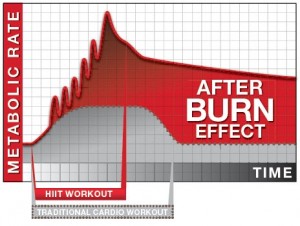
The After Burn Effect basically means that your metabolism remains elevated for longer, that you continue to use calories at a higher rate for longer after a HIIT (High Intensity Interval Training) type training session than you from a standard endurance or strength session.


High Intensity Interval Training


Basically you work hard for short periods of time with shorter rest intervals or active rest in some cases. It can be a shock to the system, a thorough warm up is essential and a good active cool down to flush the lactate out of your muscles too!  


Perseverance and determination will get you through and once you see the results that can be achieved you will be convinced that this is the way to train!


HIIT has been around for awhile in various different guises and is now a major player in the fitness industry as a way to train.


There are many fitness, lifestyle and health related reasons for including HIIT in your training regime. Listed below are just some of the benefits of HIIT

  • Time efficient - approximately half an hour or so training
  • Strength and cardiovascular gains
  • Boosts metabolism
  • Increases insulin sensitivity
  • Reduces age related arterial stiffness
  • Reduces risk of metabolic disease such as diabetes and arteriosclerosis
  • Burns more calories during and after training
  • After Burn


An increased metabolism for longer after training

HIIT has so many peripheral benefits too; it’s not about how heavy a weight you can lift but how much work you can achieve with a moderate weight. The emphasis is on whole body training so there is no pressure to stick to training certain body parts on set days etc. The variety of different workouts also means that you can adapt your training easily if you are travelling for work or pleasure and the local gym doesn’t have all your usual training equipment in it. You could even do bodyweight only workouts on the beach!


Challenge, Adaptation, Change, Progress


The variety of exercises available and the constant change in the workout structure keeps the body guessing as to what is coming next, this challenge will ensure that the adaptation to training process is always working thus limiting staleness, overtraining and driving progress.


Now this is all great if you know how to structure your workouts, choose what exercises to use and in what order to use them?


There are loads of great apps and groups available to help with this and one such is the Get Coached HIIT Works programme. This is a closed FaceBook group that gives you access to free programmes, coaching videos and the chance to get directly in touch with a coach (me) to ask any questions as well as reach out to the Pages training community for feedback, input and programme shares.


To find out more about the Get Coached HIIT Works programme please get in touch with me on tsilvester@getcoached.net or leave your email at www.getcoached.net/the-hiit-works to unleash your inner athlete and be a better you!

Thanks for reading and I hope this has inspired you to try a HIIT workout or two!

Monday, 13 February 2017

Spice up your cv workouts!

I recently asked a client of mine if they had any questions on their training and the discussion came round to cv workouts and how to make them less boring! And that is what my next blog should be on I thought, how to make cv workouts less boring. I'll need a better title though, just to spice it up a little!


Get more done in less time!

Cardiovascular work, endurance work, whatever you want to call it is traditionally thought of as steady state work, one pace. On the treadmill or cross trainer for half an hour or so at the same speed. Lots of cv equipment has interval or hill programmes included which are great and certainly help to make the training more varied and it's this type of variation that I want to talk more about.

Do your cv workouts feel like this?


There is more and more evidence showing that HIIT (High Intensity Interval Training) or Tabata type training is not only good for international athletes but for the regular gym user as well. The health and fitness benefits are many and varied and we will be covering them later in this article.
L. Véronique Billat used interval training of varying interval lengths to train high level middle distance track athletes and has shown significant improvements in endurance and speed as well as specific physiological adaptations beyond just cardiovascular improvements. The links below are citations for two of her published works on this.


Her studies also showed that this training also worked with untrained individuals as well.
Dr Izumi Tabata of Tabata training also looked at the training effects of short recovery interval training bouts, see the link below.


This study looked at the benefits of short maximum effort intervals with very short rest intervals. This became known as Tabata rounds, 20 seconds of work with 10 seconds rest for 8 efforts equalling a 4 minute round.


Tabata and Billat’s work were originally geared towards running but have both been used with body weight and weighted exercises to great effect.

This type of training has been shown to reduce body fat, increase muscle mass, increase strength and endurance, help to reduce the risks of heart disease and diabetes, high blood pressure and can increase elasticity in major arteries which can stiffen with age.

So how do I use this to make my cv workouts less boring I hear you ask?

Below is listed several workouts that should ease your boredom a little.

The first three are based on Billat’s timings and should be completed at 85% to 95% effort with active recovery at approximately  40% to 50% effort.
The last three session times are based on Tabata’s work where each bout is near maximal effort whilst recovery is minimal effort.

Work Time
Active Recovery
Effort Repetitions
No. of rounds
2 minutes
1 minute

5 to 10 rounds
4 minutes
2 minutes

3 to 5 rounds
5 minutes
3 minutes

2 to 5 rounds
20 seconds
10 seconds
8 efforts
3 to 5 rounds
40 seconds
20 seconds
4 efforts
3 to 5 rounds
30 seconds
30 seconds
4 efforts
3 to 5 rounds

These are only some of the many variations available and should be enough for most of you to be getting on with for a while.

Best advice is to continue to include some steady state recovery training in your programme approximately once every 10 to 14 days.

To find out more about HIIT Training and how it can help you please get in touch here on by email at 

tsilvester@getcoached.net 

Thanks for reading and I hope you enjoy the workouts.

Thursday, 17 November 2016

Facebook Community Project

I NEED YOUR HELP!

A “YES” OR “NO” IS NEEDED!

Get Coached is looking to start up a closed community group to provide daily HIIT workouts, health, fitness,training and nutritional advice.

It will be aimed at those who enjoy Crossfit, Metafit, Grit, Insanity, circuits and boot camps but can't or don't want to stick to a fixed schedule or workout plan.

If you are looking for somewhere that will provide you with more than just a workout then this is for you!

If you want to be part of a motivated training community where you can ask for and share information on workouts, nutrition, training plans and general health then this is for you!

You will get;

Daily workouts (HIITS)
High quality posts and articles
Regular blogs
Health, fitness, training and nutritional support
Motivational posts
Challenges and competitions
Free give aways and prizes

A Personal Training (PT) session costs approximately £30, a one off online programme £10, ongoing Online PT can cost £50 per month and more.
Magazine subscriptions can be £2 to £5 per month without interaction and for a single publication.

You will get daily programmes, blogs, articles and motivational posts.
Q & A’s on all things health, fitness, training and nutrition with Get Coached and the rest of the community.

Did I mention excellent workouts on a daily basis!

All this for only £5 a month!

Please comment “yes” if this is something you would be interested in or contact me for more information by PM me via my Facebook page @getcoached.net or email tsilvester@getcoached.net