Showing posts with label Health benefits. Show all posts

Sunday, 9 September 2018

Why you should lift weights if you are over 50!

It's a longish title but then we still gave a long way to go once we hit 50 years of age, well that's the plan anyway. We should be lifting weights throughout our life but I want to focus on why it's important for us middle aged folk to get under a bar.
Let's start with the obvious then, if we lift weights and follow an appropriate and progressive training plan then we will more than likely get stronger. This is great because it means that we are obviously making “gainz” in our training and seeing any improvements is motivational. Consistency in training is vital at this stage in our lives and steady progress is the aim.

Age is no limit to "gainz" made!

However, there are many other reasons why getting stronger and growing a little muscle is a good thing beyond squatting a new personal best. Being more muscular as we age dramatically reduces the risk of all cause morbidity by a significant amount. That’s right, being more muscular reduces our risk of dying early! Not necessarily steroidal bodybuilding muscular, just more muscular than average for our age group.
This is important and I don't think that it's widely enough known or promoted. The scope and potential benefits to society and the health service as a whole are huge as an ageing population continues to grow and consume the time and resources of an already struggling health care system. Something as simple as attending the gym 3 times per week and putting a little effort in can have a huge impact on the individual, society and the health care services.

Being more muscular reduces the risk of dying!

We are living longer with more time spent in retirement. For most of us our upcoming retirement will be one filled with activity, time spent with the family and travel. In order to maintain a quality of life that allows us to do this and enjoy it we must remain fit, strong and healthy. As I’ve already mentioned above training just 3 times per week can make a significant difference. Please consult your doctor before embarking on any form of training.
We lose muscle mass more rapidly as we age which will leave us weaker and less mobile. To counter this we must weight train, whether that’s free weights or resistance machines makes no difference. Maintaining or even increasing our lean muscle mass as we age has to be a training priority if our goal is to have some quality of life in retirement or even before.

Being weaker means that everyday tasks become harder, lifting the shopping or climbing stairs. Eventually it’s a struggle getting off the couch!
Maintaining our range of movement through our joints and muscles is essential, if we don’t move our bodies through a wide range of movements then we will potentially lose that ability to move through those ranges and will become limited, stiff and immobile. Strength training is a great way to ensure that our muscles and joints remain mobile.

Be strong and mobile

Keeping our muscles strong and functional and our joints mobile will ensure that we maintain our posture too, a good posture suggests confidence, health and vitality. Clothes fit better and we generally look fitter and younger than our untrained, less muscular and poorly postured peers.
Weight training has also been shown to promote hormonal balance and boost our metabolism, it will also help to maintain our bodies systems and functions at a higher level.

If you are not sure how to start your weight training journey or need further advice and help then reach out to a good coach or PT at your local gym. Failing that you can email me at tsilvester@getcoached.net with any questions.

Monday, 23 April 2018

Ageing - My View


These are my views and opinions on ageing, training and the things we should consider to ensure we get the most from our bodies and our training sessions. There’s no real science or research behind my comments, just experience and knowledge gained over the years.


One thing we must accept is that we will age; However, this doesn’t necessarily mean that we will get “older” at the same rate that we age. I think that we need to differentiate between age as in years on this planet and getting old which I feel is more a state of mind than a physical manifestation.

Accept it, we're getting older day by day


So let’s look at how getting old can impact us. It’s widely accepted that the mind is a powerful thing, if you think you can or you think you can’t you are right. What I mean by this is that all things being equal as in there are no extenuating circumstances such as illness or injury then if you think you are unable to do something because you are getting old or if you think that you shouldn’t be doing something because you are getting old then you won’t be able to do it!


It’s something of a self fulfilling prophecy, if you deliberately think negatively then eventually you will feel miserable and this has come from within you, no external input needed. Likewise if you smile at people, say hi and think positive thoughts then some people might think you strange but you will feel happy and positive.

No barriers to working out


My point being that chronological age is no barrier to working out, attitude is everything. I have a client who started lifting towards the end of last year and wasn’t sure they could lift a 20kg kettlebell and they recently completed a Deadlift for 5 reps at 50kg. She is 70 and is continuing to get stronger!


Chronological age will bring its own issues and we need to pay heed to them. Our bodies don’t have the recovery or regenerative abilities they had at 20. Hormone levels are lower, there is a decrease in organ mass as well as a decline in the functional reserve of the bodies systems, more on this in another post. That said our bodies can still be robust and withstand quality training sessions at twice that age and more, much more. However, respect must be paid to our bodies and we accept we are ageing and understand that we may have to do some things a little differently.


For example, I have played rugby for over 30 years, some of this at a reasonable standard. Fortunately I didn’t get any serious injuries, just wear and tear. I know I can’t do a lot of running or spin classes, high volumes of jumping also aggravate my knees and back. Nothing serious but enough to be uncomfortable and slow my training down. So I don’t run, jump or spin! Rowing is fine as is Stair Climbing, and I can lift so that’s what I do.


It's all a bit hit & miss


This whole training and ageing thing can be a bit a bit of a trial and error process, trying to figure out what will cause some kind of negative reaction and what works to improve our health, strength and fitness. Sometimes we need to take an extra rest day or change training plans to maybe do a recovery session. This isn’t quitting or giving up, it’s being sensible and listening to your body so that you get the most from it. Better to rest one day than be injured and unable to train for a week or more!


The health benefits gained by continuing to lift are many, and have been covered before. So keep moving, don’t be afraid to lift weights; in fact I wholeheartedly recommend it! If you are thinking of returning to training after a long lay off or even starting for the first time as you’ve just retired then definitely do it. Check in with your GP, talk to a Personal Trainer and go for it, you won’t regret it!

Thanks again for reading this far, I hope you have found this informative and helpful. If you have any questions that aren’t answered here please email me at tsilvester@getcoached.net or via my Facebook page @getcoached.net

Thursday, 7 September 2017

Us Ageing Athletes


I have written several short articles as well as shared some good posts on training as we age. It is an important topic as we are living longer and learning more about how much we can still actually do as we age rather than follow old tradition and accept that as we age we become useless and decrepit.


This is quite a mindset change for those already in their later years, it’s not too late for this demographic but it is harder to make the necessary changes to mind and body. If those who are moving through their 40’s and 50’s now are not already active and training then it is time to get moving. It is not too late and changes can be made. Those who are even younger have more to lose and can also make greater gains. Any activity at any age is better than none, but the right activity for your age will be far more productive.


It is during our 40’s and 50’s that our lives tends to be the busiest in terms of work and family. Climbing the career ladder, running around after our children as glorified taxi drivers and supporting them as they move through their teenage years in growing up and studying hard.


Finding time for ourselves can be a challenge, and if we want to continue to be able to support our families and have the energy to progress our careers then we need to keep ourselves fit and healthy.


This can be different from the training we may have done in our 20’s when how we looked or how we performed in our chosen sport was the priority. Now we need to consider what we can still do as well as what our training and lifestyle goals are too. Keeping mobile, fit and healthy must come higher on the priority list than washboard abs and bulging biceps. That said, this is still possible too with the right training programme and determination.


As I’ve said before we lose muscle at an ever increasing rate as we age, our metabolism slows down and we take longer to recover during and from training sessions. With this in mind it is clear that there are certain training goals that should be part of the programme irrespective of the individual’s personal goals or preferences.


  • Train to keep and gain muscle mass
  • Take appropriate recovery and rest between exercises and training sessions
  • Ensure appropriate nutrition for lifestyle goals and training aims
  • Employ both steady state and high intensity conditioning training methods
  • Listen to your body!


Training to maintain or gain muscle mass can be achieved by progressive overload of those muscles. That overload can be in the form of an increasing resistance or load, an increase in repetitions or a decrease in rest time. For high intensity conditioning Tabata or HIIT (High Intensity Interval Training) would be most appropriate. This includes Les Mills Grit, Crossfit and Metafit type training.


Stretching and mobility work is essential as we age to maintain joint range of motion, Yoga and ensuring as full a range of movement as possible when exercising will help in this too.


There are some great Master’s programmes and groups out there, Crossfit does this well as do many bodybuilding and weightlifting clubs and organisations.

However, this may not be for you and you may wish a more flexible or bespoke approach. If you want more specific help and advice on any aspect of your training plan then please do not hesitate to contact me on tsilvester@getcoached.net or via my Facebook page Get Coached.

Monday, 27 March 2017

Train less for more!

Eh? I hear you ask, what is this nonsense?


How can you get more change in your body from doing less training?

Imagine fitting your usual hour of training into half an hour, you might need to adjust the weights a little or your pace on the treadmill or bike but yes you can achieve amazing results training for less time but at a higher intensity. This is hard at first and challenging if you haven’t trained this way before.

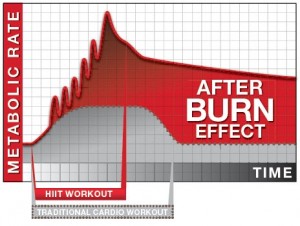
The After Burn Effect basically means that your metabolism remains elevated for longer, that you continue to use calories at a higher rate for longer after a HIIT (High Intensity Interval Training) type training session than you from a standard endurance or strength session.


High Intensity Interval Training


Basically you work hard for short periods of time with shorter rest intervals or active rest in some cases. It can be a shock to the system, a thorough warm up is essential and a good active cool down to flush the lactate out of your muscles too!  


Perseverance and determination will get you through and once you see the results that can be achieved you will be convinced that this is the way to train!


HIIT has been around for awhile in various different guises and is now a major player in the fitness industry as a way to train.


There are many fitness, lifestyle and health related reasons for including HIIT in your training regime. Listed below are just some of the benefits of HIIT

  • Time efficient - approximately half an hour or so training
  • Strength and cardiovascular gains
  • Boosts metabolism
  • Increases insulin sensitivity
  • Reduces age related arterial stiffness
  • Reduces risk of metabolic disease such as diabetes and arteriosclerosis
  • Burns more calories during and after training
  • After Burn


An increased metabolism for longer after training

HIIT has so many peripheral benefits too; it’s not about how heavy a weight you can lift but how much work you can achieve with a moderate weight. The emphasis is on whole body training so there is no pressure to stick to training certain body parts on set days etc. The variety of different workouts also means that you can adapt your training easily if you are travelling for work or pleasure and the local gym doesn’t have all your usual training equipment in it. You could even do bodyweight only workouts on the beach!


Challenge, Adaptation, Change, Progress


The variety of exercises available and the constant change in the workout structure keeps the body guessing as to what is coming next, this challenge will ensure that the adaptation to training process is always working thus limiting staleness, overtraining and driving progress.


Now this is all great if you know how to structure your workouts, choose what exercises to use and in what order to use them?


There are loads of great apps and groups available to help with this and one such is the Get Coached HIIT Works programme. This is a closed FaceBook group that gives you access to free programmes, coaching videos and the chance to get directly in touch with a coach (me) to ask any questions as well as reach out to the Pages training community for feedback, input and programme shares.


To find out more about the Get Coached HIIT Works programme please get in touch with me on tsilvester@getcoached.net or leave your email at www.getcoached.net/the-hiit-works to unleash your inner athlete and be a better you!

Thanks for reading and I hope this has inspired you to try a HIIT workout or two!